How Interface Customization Features Affect Decision-Making Processes in Multiplayer Virtual Casino Settings
Bianca Patterson · Sep 15, 2026
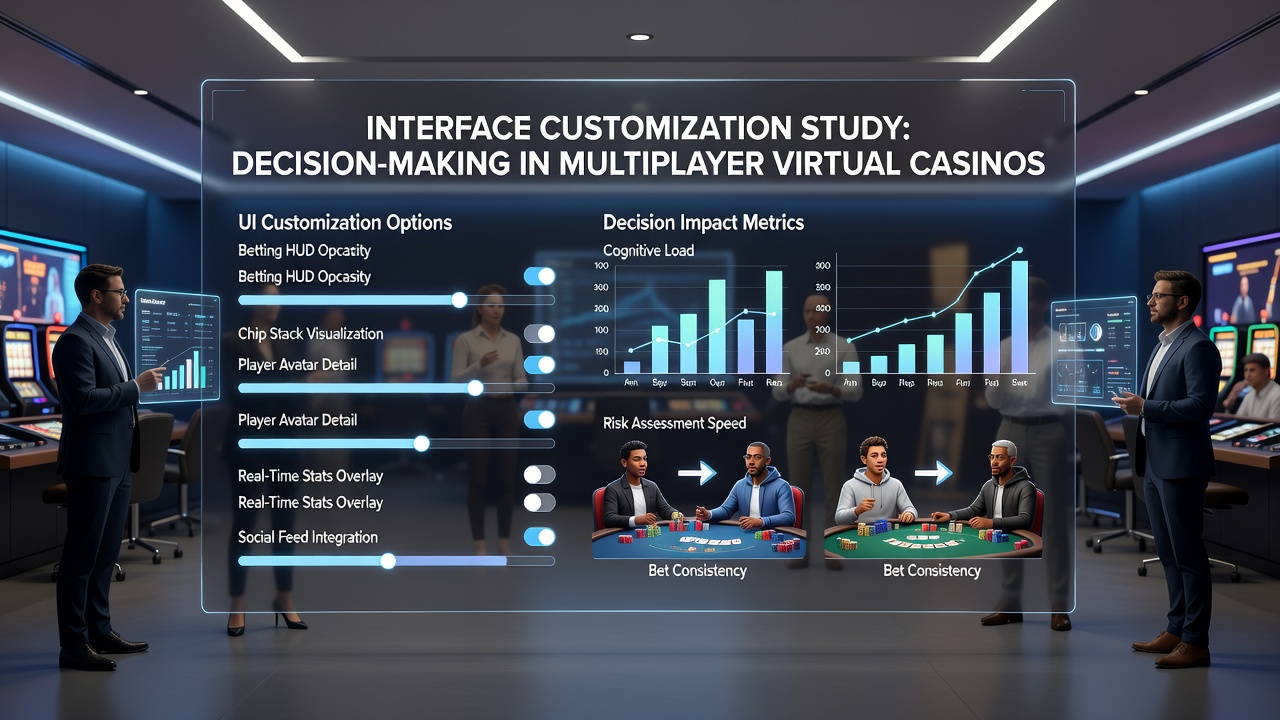
How Interface Customization Features Affect Decision-Making Processes in Multiplayer Virtual Casino Settings
Interface customization in multiplayer virtual casino platforms allows users to adjust visual elements, layout preferences, notification settings, and interaction tools before and during sessions, and researchers tracking these adjustments have documented shifts in how participants evaluate bets, respond to game cues, and coordinate with others at shared tables.
Core Customization Options and Their Reach
Players gain control over color palettes that highlight win indicators or risk meters, font sizes that clarify bet amounts and payout tables, and dashboard arrangements that prioritize certain game statistics while minimizing others. In multiplayer environments these choices extend to chat window placement, avatar visibility, and the prominence of social feeds that display fellow participants' recent moves. Data collected across North American and European platforms shows that users who reposition information panels tend to reference those elements more frequently during rounds, which in turn influences the speed and sequence of their decisions.
Visual Adjustments and Attention Allocation
When users alter contrast levels or select themes that reduce screen glare, studies indicate they maintain focus on probability displays for longer periods. One analysis of session logs from portable formats revealed that participants who customized notification tones spent fewer seconds glancing away from central game areas after each hand. The same logs demonstrated that rearranged quick-bet buttons correlated with higher rates of repeated small wagers rather than occasional larger ones, suggesting layout proximity shapes the ease of certain choices over others. Observers note that these patterns hold across both slot lobbies and live dealer rooms where multiple users share the same virtual table.
Multiplayer Dynamics and Shared Interface Elements
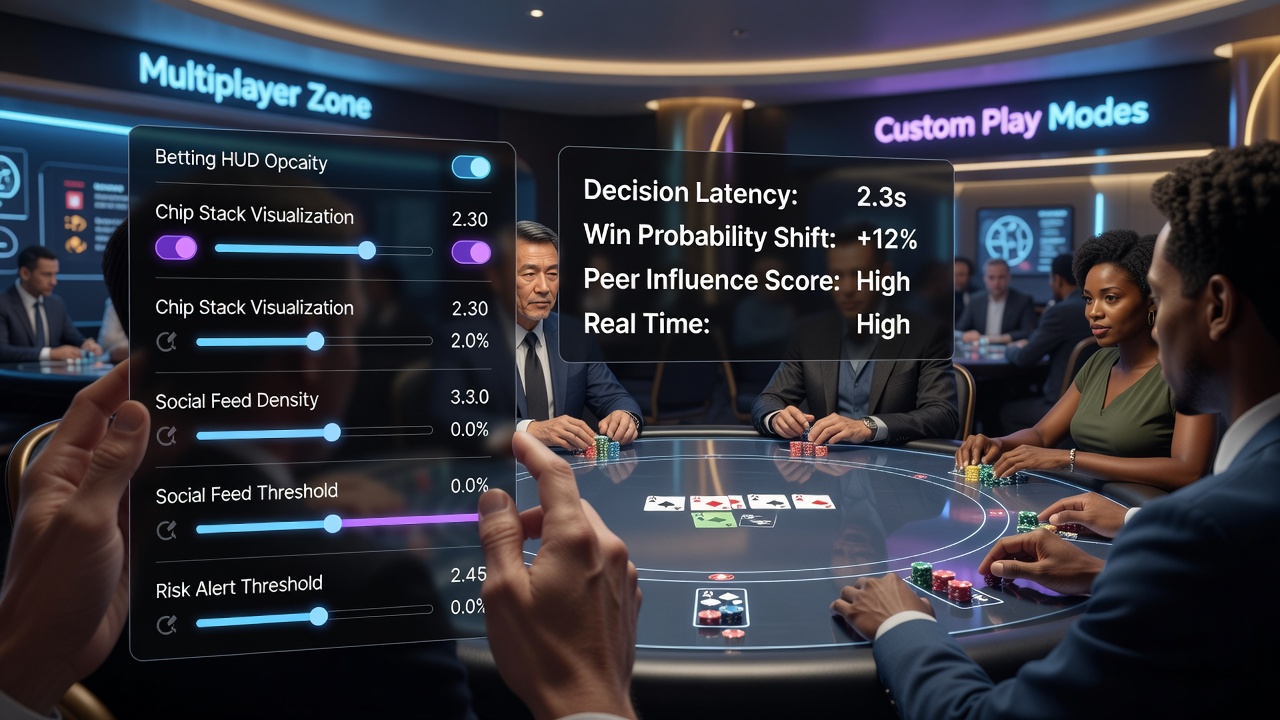
Customization tools that let individuals filter or highlight specific opponents' actions introduce new layers to group decision-making. Players who mute chat notifications while enlarging opponent statistics panels have been observed to adjust their own betting timing in response to visible patterns, even when those patterns carry no strategic advantage. Research conducted in Australia during 2025 found that groups with highly customized interfaces completed rounds more quickly on average, yet individual variance in bet sizing increased when personal dashboards differed markedly from the default view shared by others. Such divergence appears to encourage independent evaluation rather than simple mirroring of group behavior.
In September 2026 platform operators in several jurisdictions reported expanded testing of adaptive color coding that responds to real-time session data, allowing each participant to see risk indicators tailored to their historical play records. Early figures from these trials suggest the feature affects how quickly users accept or decline side bets, particularly in blackjack variants where multiple players decide simultaneously.
Notification Controls and Timing of Choices
Users who disable pop-up reward alerts while enabling subtle progress bars for loyalty tiers demonstrate steadier pacing between decisions, according to aggregated telemetry from Canadian operators. The same data set shows that selective notification settings reduce the frequency of impulsive add-on bets during live dealer sequences. Researchers tracking these behaviors across time zones have noted that the effect strengthens when customization occurs early in a session, before repeated exposure to standard alerts can establish habitual responses.
Longer-Term Patterns in Sustained Participation
Over multiple sessions, players who consistently refine their interface layouts exhibit measurable changes in average decision latency and wager distribution. Reports compiled by the New Jersey Division of Gaming Enforcement highlight correlations between repeated customization and shifts toward more conservative betting ranges in table games. Meanwhile, industry analyses from the Australian Gambling Research Centre link personalized dashboard configurations to extended session durations without corresponding increases in total amounts wagered. These findings emerge from anonymized logs that capture both interface changes and subsequent action sequences across thousands of accounts.
Conclusion
Interface customization features continue to evolve alongside multiplayer virtual casino platforms, and available data indicate they shape attention patterns, response timing, and the relative weight given to social versus statistical information during play. As operators introduce additional controls in late 2026, further examination of these mechanics will clarify how individual adjustments interact with collective decision environments.